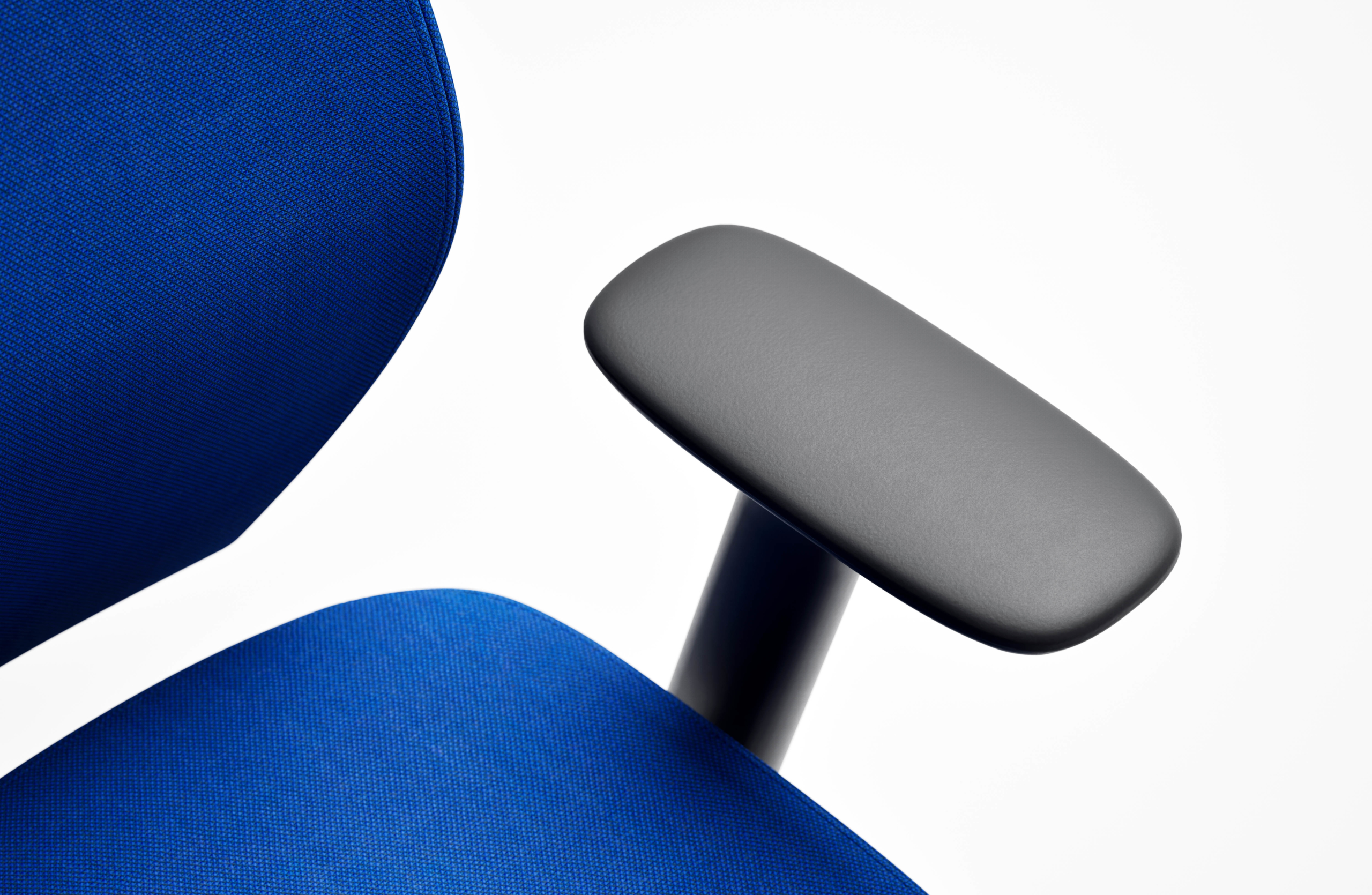
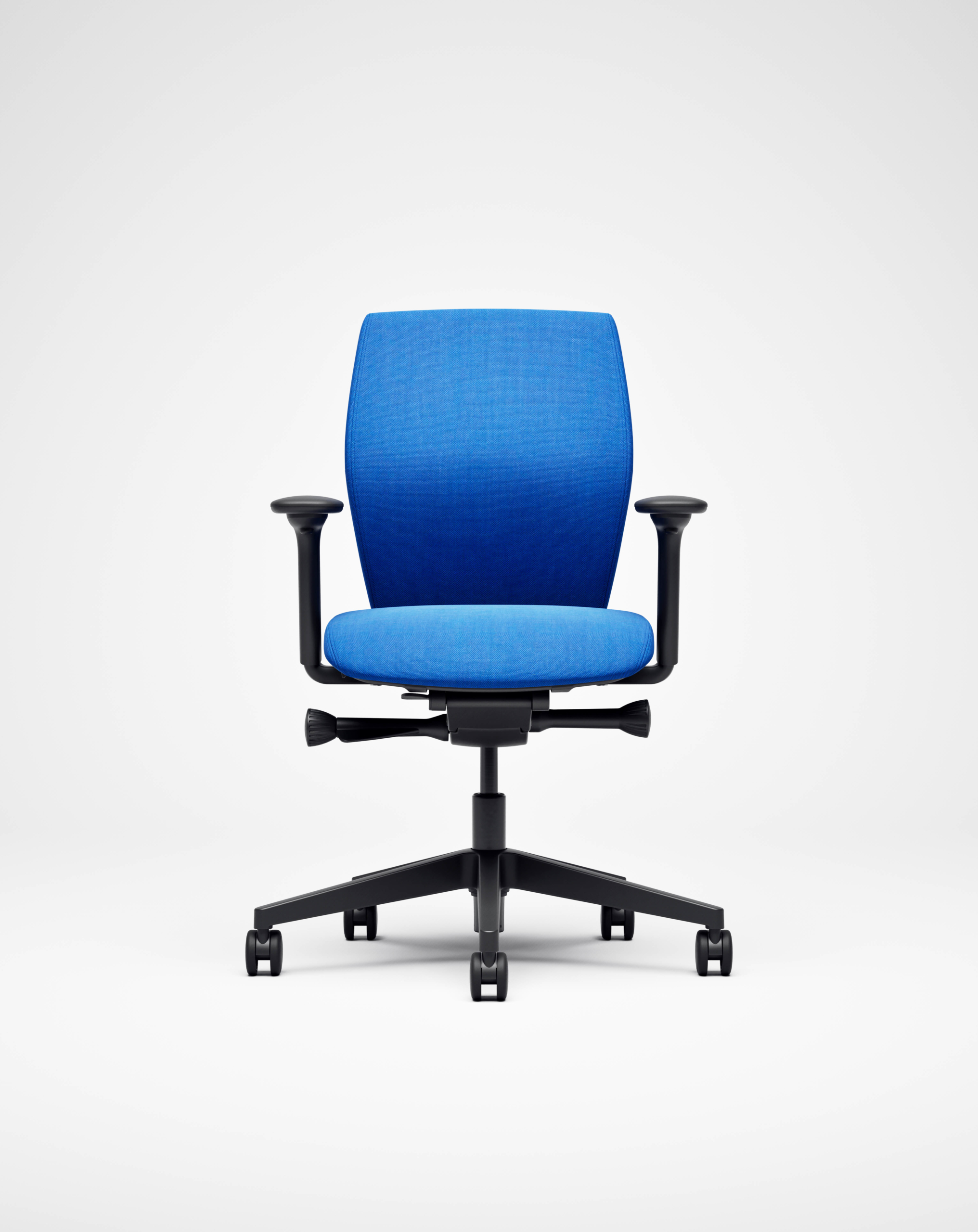
The best-selling Savo Soul family just got an upgrade with an all-new armrest. In many workplaces, the most sustainable choice isn’t replacement – it’s refinement. The new armrest embodies exactly that philosophy: enhancing comfort, functionality, and longevity without requiring you to replace the entire chair.
At Savo, adjustability isn’t optional – it’s essential. Real value lies in products that can be updated, repaired, and adapted over time. For seating, that means replaceable components that extend the life of what’s already in use.
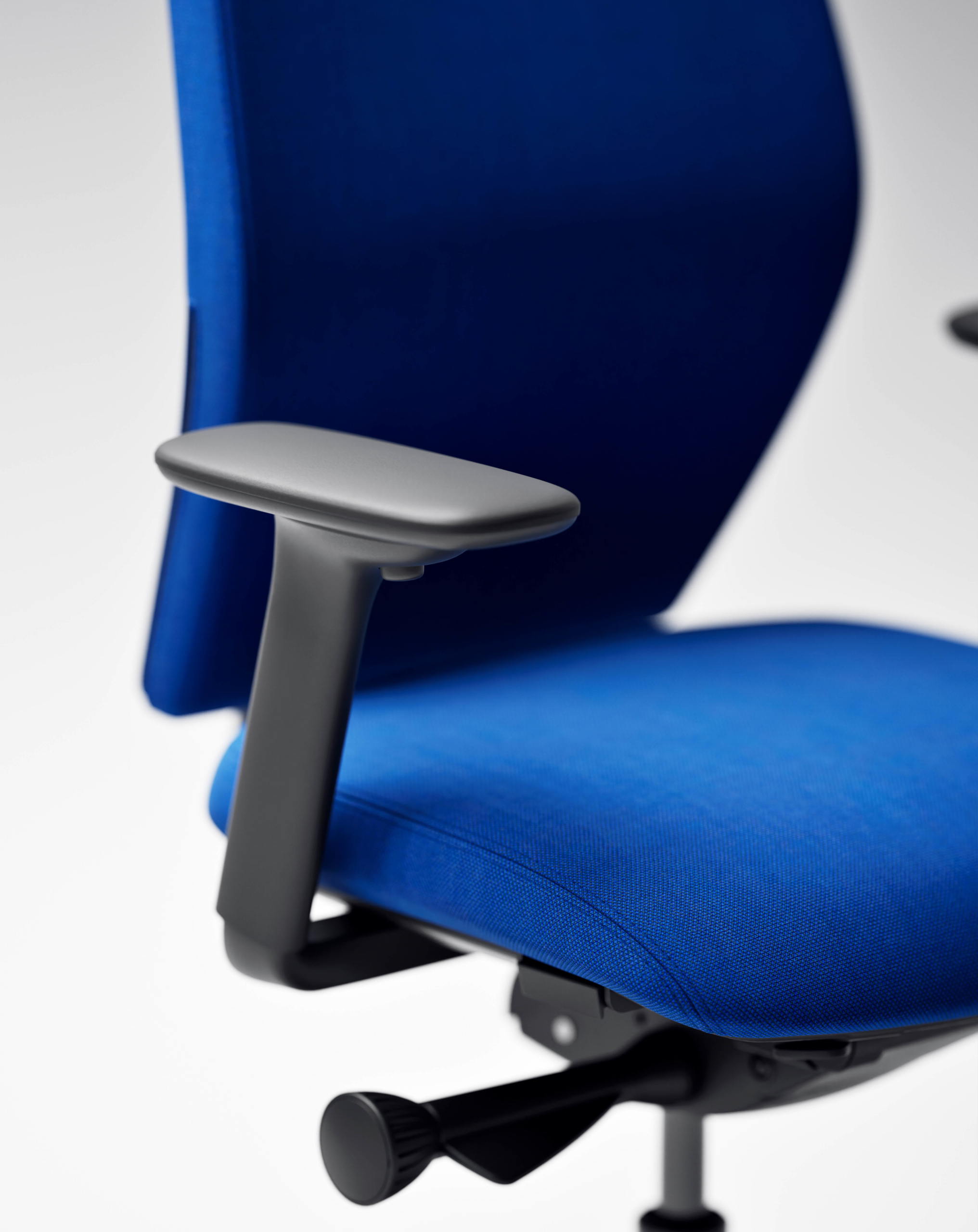
The new armrest is an upgrade, not a redesign. It builds on a proven solution and refines what matters most: ease of use, ergonomic precision, and visual clarity. Alongside classic multi-directional adjustability, the armrest top can now slide for more precise support during task-based work. A 2D version is also available, offering a simpler option without compromising comfort.
The armrest design was supervised by industrial designer Olle Lundberg and brings more contemporary expression to the Savo Soul family. While remaining clearly rooted in the Savo design language – understated, functional, and made for flexible work environments.
To understand the thinking behind the refinement, we spoke with Savo’s Product Designer, Kristina Jonsson.
What was the core problem you wanted this new armrest to solve?
K.J. Our goal was to significantly enhance the functionality and ergonomics of the armrest, ensuring it provides an even higher level of comfort and user-friendliness. At the same time, we wanted to meet all essential requirements without compromise. Another key focus was achieving a cohesive and harmonious appearance – a streamlined design language that integrates seamlessly with the overall chair concept, leaving no uncertainty about its fit or purpose.
Why was it important to design this as an upgrade rather than a new chair feature?
K.J. We already had a well-developed and highly functional armrest solution for Savo Soul, so there was no need for a complete redesign. Instead, we used the existing concept as a strong foundation and focused on refining and clarifying its features. The aim was to make the armrest easier to understand and operate, while enhancing its visual appeal and ensuring a more cohesive overall design.
What does comfort mean in practical terms when designing an armrest?
K.J. Comfort means designing armrests that are universally accessible and easy to use. They should be adjustable to suit different users, body types, and table heights. By providing proper support, the armrests help reduce strain by relieving the load carried by arms and shoulders – particularly during tasks that require continuous hand use, such as typing or detailed work.
Which adjustment do you think users will notice the most in everyday work?
K.J. The extended sideways adjustment at the top, combined with the rotation feature, will likely be the most appreciated. The adjustment process is extremely simple, requires no tools, and offers a high degree of flexibility. It allows users to shift easily between a relaxed, leaning-back position and a more forward, engaged “pole position.”
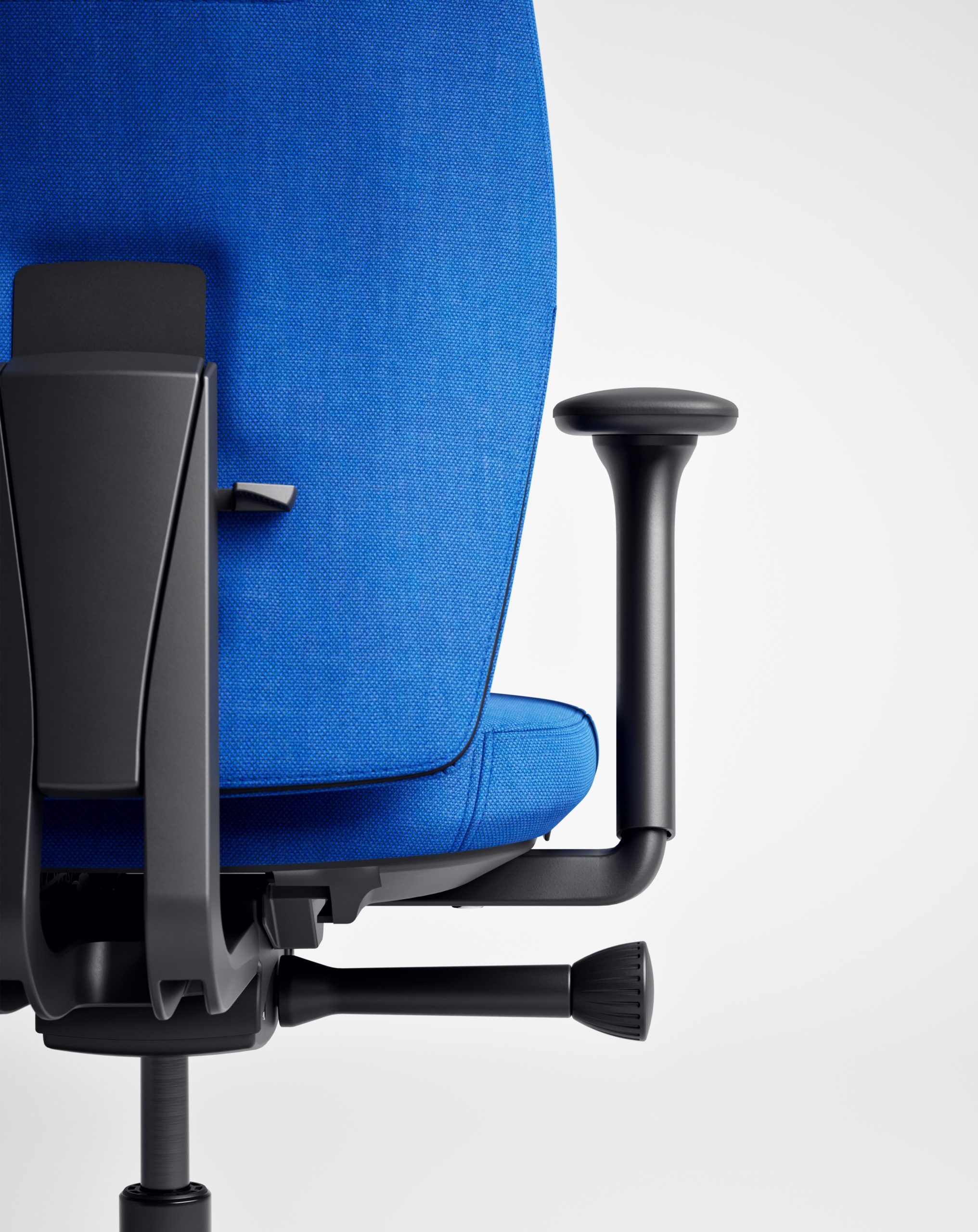
A further improvement lies in a small but meaningful detail. The button for vertical height adjustment has been repositioned to the front of the armrest’s vertical arm instead of on the outside, making it significantly easier to reach and operate during everyday use.
How do you see modular upgrades like this shaping the future of seating design?
K.J. It’s important to establish a well-curated core assortment that remains relevant and appealing over time without appearing outdated. To achieve that, certain parts and details need to be continuously updated, while preserving the overall design expression and ensuring that all essential and expected functions remain intact.

Small details, meaningful difference
Ease of use plays a bigger role than it’s often given credit for. That’s why the new armrest offers tool-free width adjustment, removing friction from everyday fine-tuning and making it easier to adapt the chair to different users.
Comfort has also been carefully considered in the materials. The polyurethane top provides a noticeably softer feel than traditional plastic, supporting the arms during long periods of focused work without adding visual bulk.
These details matter most in environments where seating is shared, reconfigured, or updated over time. Instead of replacing chairs, existing seating can be upgraded with a new armrest – extending lifespan while improving the user experience.
A future-ready upgrade
The new armrest is available in black and white, in both 2D and 5D versions, and is offered as an addition to the chair – not a replacement. It’s a thoughtful update to a chair that has already proven its value.
By focusing on adaptability, comfort, and longevity, the new Savo Soul armrest reflects a broader shift in how seating is designed today – not as a finished object, but as something that evolves with the way we work.
Change a part, not the whole chair.
By refining individual components rather than redesigning everything, we can keep products relevant, functional, and visually contemporary – while preserving what already works.
Kristina Jonsson, Product Designer at Savo